.png)
Considerations for Travel with Medical Conditions: Obesity
- Alethea Johnekins
- May 7
- 5 min read

Before we begin, I want to make something very clear. This article is not intended to shame people living with obesity or suggest that individuals in larger bodies should put their lives on hold until they lose weight. I firmly believe that people of all sizes deserve full, meaningful, enriching lives without embarrassment or humiliation. Everyone deserves the opportunity to experience joy, rest, adventure, family vacations, and seeing the world.
At the same time, obesity can create very real logistical and physical challenges during travel, particularly when combined with mobility limitations or other medical conditions. The purpose of this article is not judgment. It is preparation. My hope is that by discussing these challenges honestly and practically, travelers can plan ahead, reduce stress, and create more enjoyable travel experiences.
To many people, obesity is not viewed as a medical condition. In some circles, it is seen as a lifestyle choice, while in more critical circles it is viewed as a moral failure. On this blog, I am defining obesity using the same terms as the World Health Organization (WHO), which defines obesity as having a body mass index (BMI) of 30 or greater.
While not all people living with obesity will face obstacles while traveling, in general, the more body mass a person carries, the more difficult certain aspects of travel can become. In many ways, our society is simply not built for people with larger bodies. This includes airplanes, bus aisles, amusement park rides, restaurants, and even some lodging spaces. There can be a lot of challenges involved in simply enjoying time away as a bigger person, but take heart. A little advanced planning can go a long way.
Let’s start with airlines and airports. First, because obesity can sometimes come with coexisting medical conditions, it is important to know that accommodations are widely available at airports. If you have mobility limitations, you can arrange wheelchair assistance through the airport free of charge, although tips are customary.
Additionally, if you are traveling with your own wheelchair or mobility device, reach out to the airline ahead of time to determine how your equipment can travel with you. For example, many power chairs can be checked free of charge, but airlines often have battery requirements, size limitations, and advance notification procedures. I strongly suggest contacting the airline directly before your trip.
Airport security can also present challenges. Some travelers may require additional screening or hand searches. One workaround many travelers find helpful is enrolling in TSA PreCheck. Also, if you are traveling with coexisting conditions such as diabetes or sleep apnea, make sure you have researched those travel needs as well. I have already written a blog post on traveling with diabetes that may be helpful to reference.
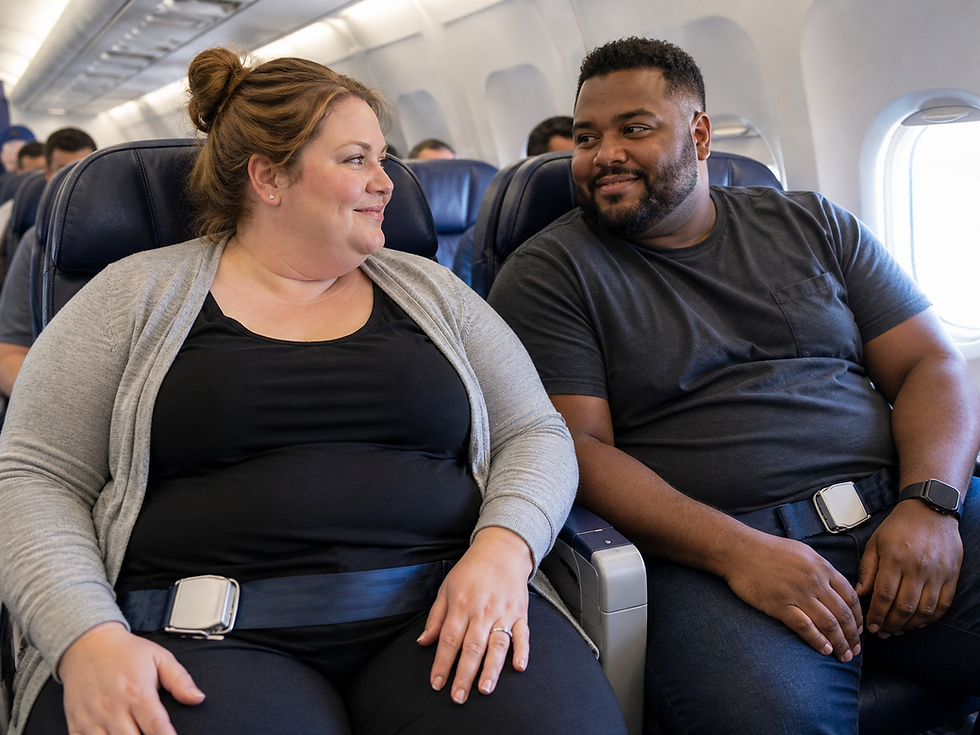
When it comes to flying, every airline handles plus-size travelers a little differently. In general, passengers who cannot fit into a single seat without encroaching on another passenger’s space may be expected to purchase a second seat. If a passenger has not purchased an additional seat and there are concerns about space, the airline may attempt to move them next to an empty seat if one is available. If the flight is full, rebooking may become necessary.
Some airlines, such as Southwest, have policies that may reimburse the cost of an additional seat, but the booking process must usually be followed very carefully. Because policies vary widely, I strongly recommend reviewing each airline’s website and speaking directly with customer service before booking.
Airlines may also suggest upgrading to a different class of seating, such as first class, which typically offers more space. However, while this may be a realistic option for some travelers, it is simply not financially practical for many others.
Another common accommodation is a seatbelt extender, which can typically be requested from a flight attendant during boarding. I have read accounts from travelers who experienced difficulty obtaining one and chose to purchase their own. However, some airlines prohibit personal seatbelt extenders, so it is important to review airline-specific policies ahead of time. I also learned that some airlines may deny boarding if multiple extenders are required. Again, this is why contacting the airline directly and explaining your specific needs prior to travel is so important.
Another area where preplanning becomes extremely important is entertainment and amusement parks. Theme park tickets are expensive, and it is important to know ahead of time whether the experience will truly be enjoyable and accessible for you. Nothing is more disappointing than arriving excited to ride attractions only to discover that certain rides cannot safely accommodate your body size or mobility needs.
If you require mobility accommodations, planning ahead can make a huge difference. In many cases, renting an ECV or scooter from a private company for the week is significantly less expensive than paying daily rental rates at the park itself. I also recommend contacting the park’s guest accessibility department before your visit to ask specific questions about accommodations.
Every park handles accessibility differently. For example, Universal Studios uses the IBCCES Accessibility Card system, which requires approval prior to your visit. Disney uses its own accessibility system, but it is important to understand that accommodations do not typically include skip-the-line privileges unless guests meet very specific criteria, usually related to cognitive or neurodivergent needs.
One resource I have personally found very helpful is YouTube. Some plus-size content creators document their experiences trying rides at different theme parks. Many creators share their height and weight so viewers can compare body types and get a realistic idea of whether a ride may work for them. My current favorite channel for this type of content is Jason Vaughn and the “Fat Tested Travel Agent” channel.
Using test seats whenever available is also very helpful, although not every attraction has them. While many people feel embarrassed about the possibility of not fitting on a ride, my personal opinion is this: if you truly want to ride and there is no test seat available, try. It is your vacation. You paid for the experience. Don’t miss something fun simply because you are afraid you might not fit.
Other helpful travel considerations may include:
Carefully choosing AirBNB or VRBO accommodations, as some spaces may be extremely small or difficult to navigate comfortably.
Request hotel rooms with features like grab bars or zero-entry showers if needed.
Requesting specific seating at restaurants. Asking for easily accessible seating when checking in can help avoid awkward situations involving tight aisles or cramped tables.
Arriving early to flights, shows, and attractions. Early boarding on airlines can make seating and settling in less stressful.
Looking carefully at possible obstructions when booking theaters, shows, or stadium seating so you can choose seating arrangements that will be more comfortable.
With thoughtful planning and realistic expectations, traveling while living in a larger body is not only possible, it can also be enjoyable, meaningful, and rewarding.

header.all-comments